

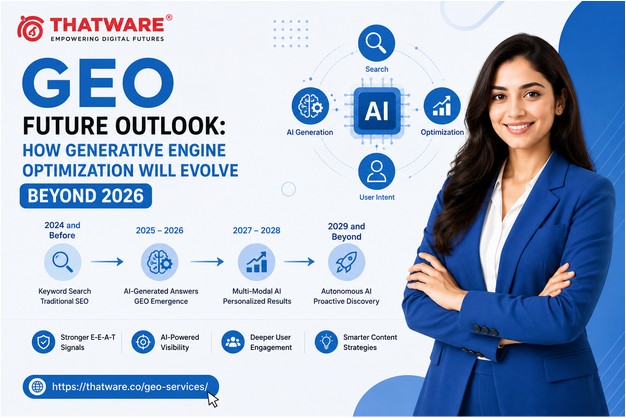
Predicting the future of any technology discipline is a little bit like reading weather patterns — you can identify the currents, but precision gets shakier the further out you look. GEO is especially tricky to forecast because it’s inherently dependent on AI development trajectories that are themselves moving fast and in sometimes surprising directions.
That said, there are some things about how GEO will evolve that seem reasonably clear — not because the future is predictable, but because the underlying dynamics are structural rather than contingent. And for brands trying to decide how much to invest in GEO now, understanding those structural trends matters.
From Citation to Conversation
The current paradigm for GEO is essentially about citations — getting your brand, content, or expertise referenced in AI-generated answers. That paradigm will evolve. The direction it’s moving is toward something more conversational and ongoing.
AI assistants are getting better at multi-turn reasoning — the ability to hold context across a conversation, ask clarifying questions, and refine recommendations based on user feedback. As that capability matures, the AI search experience will start to feel less like “query → answer” and more like “consultation.” A buyer researching project management software won’t just get a list of recommendations — they’ll have a dialogue where the AI helps them think through their specific requirements and narrows toward personalized suggestions.
In that paradigm, brand visibility isn’t just about appearing in an answer. It’s about being the answer the AI returns to repeatedly across a multi-turn conversation about a particular problem. That requires a different kind of authority — not just content coverage, but the kind of deep, nuanced positioning that lets an AI confidently recommend you for a specific buyer’s situation.
GEO strategy for visibility in generative search is already starting to account for this conversational dimension — structuring content not just to answer single queries but to build the kind of multi-faceted brand profile that supports nuanced AI recommendations.
Multimodal GEO
Right now, GEO is predominantly a text game. The content that AI systems draw from is mostly written — articles, blog posts, documentation, reviews, structured data. That’s going to change.
Multimodal AI capabilities are expanding rapidly. Models that process images, audio, and video alongside text are becoming standard. As AI assistants evolve to answer questions using a broader range of content types, GEO strategy will need to expand accordingly.
For brands, this means thinking about GEO dimensions beyond text: video content that demonstrates expertise, visual assets that are properly described and structured, audio content (podcasts, interviews) that builds association between brand voices and topic authority. The infrastructure for multimodal GEO is still being built, but brands that start building a coherent multimodal authority profile now will have a head start when those signals matter more.
The Verification Layer
One of the tensions in current AI search is accuracy versus authority. AI models can cite sources that are confident without being correct. The major AI platforms are all working on this problem, and the likely trajectory involves stronger verification mechanisms — AI systems that are better at cross-referencing claims, identifying contradictions, and surfacing uncertainty.
For GEO strategy, this means that accuracy and factual grounding will become even more important than they already are. Content that is technically detailed, carefully sourced, and consistently accurate across a brand’s entire content corpus will perform better than content that’s well-optimized but superficial. It’s a GEO trend that rewards brands who take their content seriously — which is genuinely encouraging for brands willing to invest in quality.
Personalization and Contextual Matching
AI assistants are getting better at personalizing recommendations based on user context. This has significant implications for GEO. Rather than a single “best for everyone” recommendation, AI systems will increasingly surface different options based on user-specific signals — company size, industry, stated preferences, previous interactions.
For brands, this means that positioning specificity matters more than trying to be all things to all buyers. A brand that is clearly the best option for a specific buyer profile will benefit from AI’s increasing ability to match specific buyer contexts to specific solutions.
The brands that try to appeal to everyone with generic positioning will get generic AI citations. The brands that invest in crystal-clear positioning for specific segments will find AI systems recommending them precisely for the buyers they actually serve best.
Working with top GEO agencies on segment-specific content architecture is increasingly the sophisticated approach — building differentiated authority profiles for each key buyer segment rather than a single monolithic brand presence.
The Commoditization Threat
One honest note about GEO’s future: as the discipline matures, basic GEO practices will become table stakes rather than competitive advantages. The brands doing nothing about GEO right now are falling behind. But in three years, most serious brands in most categories will have basic GEO foundations in place.
The competitive moat in mature GEO will come from depth, from genuine expertise demonstrated through content quality, from citation relationships that can’t be quickly replicated, from brand authority built over years rather than months. The window to build those durable advantages before GEO becomes fully commoditized is now.
That’s the real urgency in the GEO future outlook — not panic, but a clear-eyed recognition that the brands building authority today are building advantages that will be significantly harder to close once the field gets crowded.